In short
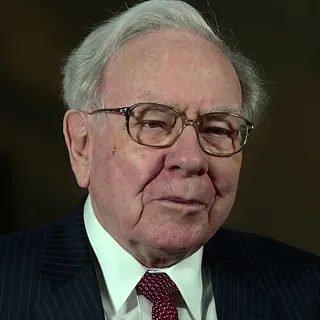
Benjamin Graham (1894–1976) is the father of value investing. In Security Analysis (1934, with David Dodd) and The Intelligent Investor (1949) he defined the difference between investing and speculating, invented Mr. Market, and made the margin of safety the central rule of sound investing. His student Warren Buffett still calls The Intelligent Investor the best book on investing ever written.
Key takeaways
- Investing means thorough analysis, safety of principal and an adequate return; everything else is speculation.
- Always demand a margin of safety between price and value.
- Mr. Market is there to serve you, not to guide you.
- In the short run the market votes; in the long run it weighs.
- Be businesslike: think like the owner of the whole company.
The dean of Wall Street
Benjamin Graham was born Benjamin Grossbaum in London on May 9, 1894, and grew up in New York after his family emigrated when he was an infant. His father died young and the family slid into poverty, an experience that left Graham with a lifelong respect for safety. He graduated from Columbia in 1914, turned down offers to teach English, mathematics and philosophy, and went to Wall Street, where he quickly became known for digging into financial statements that most brokers never read.
By the 1920s he was running money in a partnership with Jerome Newman, which became the Graham-Newman Corporation. The crash of 1929 and the years that followed cut his capital by roughly 70%, a searing lesson that shaped the conservatism of everything he later wrote. From 1928 to 1956 he taught a security analysis course at Columbia Business School, where his students included Warren Buffett. Buffett later worked for Graham-Newman from 1954 until Graham retired in 1956. Graham spent his last years in California and France and died in Aix-en-Provence on September 21, 1976.
Graham's reputation rests on two books. Security Analysis, written with David Dodd and first published in 1934, gave professional investors a systematic method for valuing stocks and bonds. The Intelligent Investor, first published in 1949 and revised several times, translated those ideas for individuals. Both remain in print, and both are the reason Graham is called the father of value investing.
Investment versus speculation
Before Graham, there was no generally accepted line between investing and gambling in stocks. He drew one. In Security Analysis he defined an investment operation as one that, upon thorough analysis, promises safety of principal and an adequate return, and he called everything else speculation. The definition has three parts, and each one matters: the analysis must be thorough, the principal must be reasonably safe, and the return must be adequate, not spectacular.
“Investment is most intelligent when it is most businesslike.”
That definition turned investing into a discipline rather than a mood. It meant that the same stock could be an investment at one price and a speculation at another. It meant that buying because a price is rising is not investing, however respectable the company. And it meant that the investor's job is to analyze the business behind the stock as a businessman would, which is why The Intelligent Investor closes with the line Buffett has quoted for decades: investment is most intelligent when it is most businesslike.
Graham did not condemn speculation outright. He accepted that people would do it and advised them to keep a separate, limited account for it, so they would never confuse the two activities. His concern was with people who believed they were investing when they were actually speculating, especially with borrowed money.
The margin of safety
The idea Graham is most associated with is the margin of safety. In the final chapter of The Intelligent Investor he wrote that, if forced to distill the secret of sound investment into three words, he would choose those. Warren Buffett, quoting the passage in his 1990 letter, said that forty-two years after first reading it he still thought they were the right three words.
“Confronted with a challenge to distill the secret of sound investment into three words, we venture the motto, Margin of Safety.”
A margin of safety is the gap between what you pay and a conservative estimate of what something is worth. It exists because estimates are uncertain, the future is unknowable and people make mistakes. An engineer designs a bridge to carry far more than the heaviest truck that will ever cross it. Graham wanted investors to buy with the same cushion, so that a disappointing year, a recession or an error in analysis would not lead to a permanent loss.
For bonds the cushion was earnings power well above interest charges. For stocks it was a price well below the value of the business, measured by assets, by normal earnings power, or both. His most famous technique, buying companies for less than their net current assets (cash, receivables and inventories minus all liabilities), was the margin of safety in its purest form: in effect, you got the buildings, the brand and the future for free.
Mr. Market and the voting machine
Graham's most enduring metaphor is Mr. Market, introduced in The Intelligent Investor. Imagine that you own a share in a private business with a partner named Mr. Market. Every day he tells you what he thinks your share is worth and offers to buy it or sell you his at that price. Some days he is cheerful and quotes absurdly high prices; other days he is despondent and offers to sell for almost nothing. Buffett, retelling the story in his 1987 letter, said the poor fellow has incurable emotional problems.
“In the short-run, the market is a voting machine - reflecting a voter-registration test that requires only money, not intelligence or emotional stability - but in the long-run, the market is a weighing machine.”
The lesson is not that market prices are meaningless, but that they are offers, not instructions. You are free to ignore Mr. Market, or to take advantage of his moods. The mistake is to let his moods become yours: to feel poorer and sell when he is gloomy, or richer and buy when he is euphoric.
Graham expressed the same idea in another image Buffett has quoted many times: in the short run the market is a voting machine, registering popularity, and in the long run it is a weighing machine, registering value. The investor's edge comes from patience. If you are right about value, the weighing machine eventually does the work for you.
The defensive and the enterprising investor
The Intelligent Investor is organized around a distinction that remains useful today. The defensive investor wants safety and freedom from bother. Graham advised such investors to split their money between high-grade bonds and a diversified group of large, conservatively financed companies with long dividend records, never going below 25% or above 75% in stocks, and to rebalance as markets moved. Formula plans and dollar-cost averaging appealed to him because they removed emotion.
The enterprising investor is willing to devote serious time and effort in return for a better result. For that person Graham described bargain issues, special situations, net-net stocks and other areas where careful work could find mispriced securities. But he was explicit that the extra return comes from extra effort and knowledge, not from boldness alone. An investor unwilling to do the work should be defensive and not pretend otherwise.
Seen through today's eyes, the defensive portfolio sounds a lot like a low-cost index fund combined with bonds. Late in life Graham himself said that elaborate security analysis had become far less rewarding as markets grew more efficient, and he favored simpler methods for most investors.
Temperament over intellect
Graham believed that the investor's greatest enemy is usually not the market or the economy but himself. Fear, greed, impatience and the urge to follow the crowd cause more damage than any lack of information. That is why so much of The Intelligent Investor is about behavior rather than arithmetic.
“Buy when most people…including experts…are pessimistic, and sell when they are actively optimistic.”
It also explains his contrarian streak. Sir John Templeton, in his 16 rules, quoted Graham's advice to buy when most people, including experts, are pessimistic, and sell when they are actively optimistic. The advice is simple to state and very hard to follow, because it requires acting against the consensus at precisely the moments when the consensus feels most convincing.
Graham's own losses in the early 1930s gave him humility about risk. He and Dodd wrote that the relation between investments and the risk of loss is too indefinite and too variable to permit sound mathematical formulation. His answer was not a formula but a habit: diversify, insist on a margin of safety and keep your head.
Graham's legacy
Graham's students and followers, including Buffett, Walter Schloss, Irving Kahn and many others, compiled extraordinary records using variations of his approach. Buffett famously described them in a 1984 talk as the superinvestors of Graham-and-Doddsville. Over time, Buffett and Munger moved from Graham's statistical bargains toward high-quality businesses bought at fair prices, but they kept the framework: analysis, a margin of safety and emotional discipline.
Nearly every modern value investor, quantitative value fund and even the idea of a value factor descends from Graham's work. More importantly for ordinary investors, his core lessons still hold: know the difference between investing and speculating, never pay more than a conservative estimate of value, and treat the market's moods as opportunities rather than instructions.
The principles in practice
Ideas only matter if they change decisions. Here is how Graham's philosophy translates into habits an ordinary investor can use. The full version, with a supporting quote for each rule, is on the investing advice page, and the printable checklist turns it into questions to ask before every purchase.
- 1. Know whether you are investing or speculating
Graham's first lesson was a definition. An investment, upon thorough analysis, promises safety of principal and an adequate return; anything else is speculation. Speculating is not forbidden, but you should know when you are doing it and limit the money involved.
- 2. Demand a margin of safety
Pay so much less than your conservative estimate of value that errors, bad luck or a weak economy still leave you whole. Graham called it the secret of sound investment in three words.
- 3. Treat Mr. Market as a servant
Graham pictured the market as a manic-depressive partner who offers a new price every day. You can ignore him, buy from him when he is gloomy and sell to him when he is euphoric, but never let him tell you what your shares are worth.
- 4. Be businesslike
Analyze a stock as you would a private business: earnings power, assets, debt, management and price. Graham closed The Intelligent Investor by saying investment is most intelligent when it is most businesslike.
- 5. Choose your role: defensive or enterprising
Graham separated defensive investors, who want safety and freedom from effort, from enterprising investors willing to do real work. Defensive investors should hold a diversified mix of high-grade stocks and bonds and rebalance; only enterprising ones should hunt for bargains.
- 6. Diversify and stay humble about risk
Because the risk of loss cannot be reduced to a formula, Graham spread his bargains widely and kept a meaningful share in bonds. Diversification was his practical answer to uncertainty.
- 7. Lean against the crowd
Buying when experts are gloomy and selling when they are euphoric is uncomfortable but, as Templeton noted, it is exactly what Graham advised.
FAQ
When did Benjamin Graham die?
Graham died on September 21, 1976, in Aix-en-Provence, France, aged 82. This is a legacy profile with historical quotes only.
What is the margin of safety?
The gap between the price you pay and a conservative estimate of value. Graham called it the secret of sound investment in three words, and Buffett still agrees.
Who is Mr. Market?
Graham's imaginary business partner who offers a new price for your shares every day depending on his mood. The lesson is to use his offers when they are attractive and otherwise ignore him.
Did Graham say the market is a voting machine and a weighing machine?
The idea is Graham's, but the famous wording comes from Warren Buffett's retellings in his letters, which vary slightly. We show Buffett's 1993 rendering and say so.
Should I read Security Analysis or The Intelligent Investor first?
For most individual investors, The Intelligent Investor. Security Analysis is longer and aimed at professionals.
Books by and about Graham
The Intelligent Investor
Mr. Market, the margin of safety and defensive vs. enterprising investing. Later editions include commentary by Jason Zweig.
Security Analysis
With David Dodd. The professional's text; later editions edited by Seth Klarman and others.
The Interpretation of Financial Statements
With Spencer B. Meredith. A short, practical guide to reading company accounts.
All books, including the ones Graham recommends →
As an Amazon Associate, GuruVoices earns from qualifying purchases. Book recommendations are chosen from what the investors themselves wrote or said, never from what pays.
Every quotation on this page was checked word for word against the linked source. Dates are when the words were published or spoken. Quotes that are popular but that we could not trace to a primary source are listed separately on the quotes page.