In short
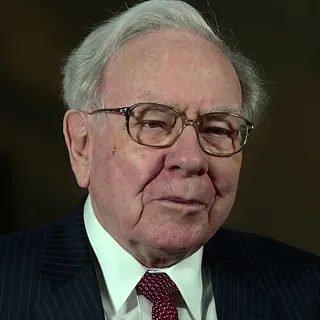
Peter Lynch ran Fidelity's Magellan Fund from 1977 to 1990 and turned it into the largest mutual fund in the world, then retired at 46 to spend time with his family. His message to ordinary investors is unusually encouraging: invest in what you know, do the homework, understand the story behind every stock, ignore economic forecasts, and have the stomach to stay invested through declines.
Key takeaways
- Know what you own and be able to explain it simply.
- Your everyday life is an early-warning system for great companies.
- Earnings drive stock prices over time; forecasts do not.
- Declines are normal: stomach, not brain, is the key organ.
- Time is on your side; a long horizon turns volatility into opportunity.
The Magellan record
When Peter Lynch took over Fidelity's Magellan Fund in May 1977 it held about $20 million. When he stepped down in May 1990 it managed roughly $14 billion and had become the largest mutual fund in the world, with an average annual return of about 29% over his 13 years, far ahead of the S&P 500. He retired at 46, explaining that he wanted to spend more time with his family, and later wrote three books for individual investors.
What makes Lynch unusual among great fund managers is that his message was never that investing is too hard for ordinary people. Quite the opposite. He argued that amateurs have real advantages over professionals, if they use them, and that the habits needed to do well are simple even if they are not easy. This page is built from his own recorded words, primarily a long interview he gave PBS Frontline for its 1997 program Betting on the Market.
Invest in what you know
The phrase most associated with Lynch is invest in what you know. It is often misread as buy the brands you like. What he actually meant was that everyday experience gives you an early look at companies whose products are winning, often long before Wall Street analysts notice. A shopper who sees a store packed every weekend, an engineer who sees which supplier everyone in her industry is switching to, or a parent who notices which toy every child wants has a head start.
“If somebody invents a new logic chip, I'm not going to know about it. No one's every going to invent a better donut.”
Lynch gave his own example in the Frontline broadcast. Standing near a Dunkin' Donuts, he joked that if somebody invents a new logic chip he will not know about it, but no one is ever going to invent a better donut. Simple, understandable businesses with growing demand can be wonderful investments, and you do not need a technical degree to evaluate them.
The second half of the phrase is the part people forget: the observation is the start of the research, not the end. Lynch was emphatic that a good product does not automatically make a good stock. You still need to know whether the company is profitable, how much debt it carries, how fast it is growing and what the stock price already assumes.
Know the story behind every stock
Lynch's discipline was to be able to explain, briefly and in plain language, why he owned each stock. In a recent interview reported by The Economic Times he repeated an expression he has used for decades: know what you own, because if you don't understand what you own, you are toast. Investors often quote a version about explaining the stock to an 11-year-old in two minutes; we mark that one as reported rather than verified.
“I have this expression: 'Know what you own'. If you don't understand what you own, you are toast”
In One Up on Wall Street (1989) he organized stories by type: slow growers, stalwarts, fast growers, cyclicals, turnarounds and asset plays. Each category comes with different expectations. You buy a stalwart for steady gains and sell it after a big run; a fast grower can compound for years as long as its expansion continues; a cyclical has to be bought near the bottom of its earnings cycle, when it looks worst. Knowing which story you own tells you what to watch and when the thesis has broken.
He also popularized a simple valuation sanity check, comparing a company's price-to-earnings ratio with its earnings growth rate. A P/E roughly equal to the growth rate suggested a fair price, and a P/E well below it suggested a bargain. Later writers named the ratio PEG. Lynch presented it as a rule of thumb, not a formula, and always paired it with the balance sheet and the story.
Do your homework
Lynch loved to point out a strange inconsistency. When people buy a house, he said, they check the school system, the street and the plumbing. When they buy a refrigerator or a microwave oven they read Consumer Reports. Then they put $10,000 in some zany stock they heard about on a bus on the way to work, without knowing what the company does, and wonder why they lose money.
“They'll put $10,000 in some zany stock that they don't even know what it does that they heard on a bus on the way to work and wonder why they lose money”
His cure was hard work. In the Frontline broadcast he said he visited over 200 companies every year. Individual investors cannot match that, but they can read the annual report, listen to the earnings call, compare a company with its competitors and check the numbers that matter: earnings growth, debt, cash, inventories and how much of the company insiders own.
Homework also protects you from the most expensive mistakes: buying hot stocks in hot industries, chasing tips, and confusing a good story with a good price. Lynch's best investments were often boring companies in boring industries that the crowd was ignoring.
Earnings, not forecasts
Lynch's view of the market as a whole was rooted in one relationship: over time, stock prices follow corporate profits. Historically, he noted in the PBS interview, corporate profits have grown about eight percent a year, doubling every nine years; add a dividend yield and you get roughly the long-run return of stocks. The right question for an investor is therefore whether the companies you own will be earning more in ten or twenty years.
“I've always said if you spend 13 minutes a year on economics, you've wasted 10 minutes.”
Economic forecasting, by contrast, he considered close to useless for stock picking. He pointed out that no one predicted the severe 1982 recession with its 14% inflation and 20% prime rate, and that nobody told investors when the recovery was coming either. His famous line, that if you spend 13 minutes a year on economics you have wasted 10 minutes, is about forecasting the economy, not about understanding the industry you invest in. If you own auto stocks, he added, you ought to follow car sales and used-car prices.
This is a liberating idea. You do not need to know where interest rates or GDP are going. You need to know your companies, and to be confident that most of them will be bigger and more profitable a decade from now.
Stomach is the key organ
Lynch was candid about volatility. In the PBS interview he counted 53 declines of 10% or more in 95 years, about one every two years, and 15 declines of 25% or more, about one every six years. Nobody knows when they will start. If you are not ready for that, he said, you should not be in the stock market. Stomach is the key organ here, not the brain.
“I mean stomach is the key organ here. It's not the brain.”
He lived the point in October 1987, when the market fell more than 20% in a day while he was on a trip to Ireland. Magellan lost a large share of its value in days, and he had to sell stocks to meet redemptions from frightened shareholders. The investors who stayed recovered and went on to gain much more; those who sold locked in the loss.
That is why time horizon matters so much. Owning stocks with a one- or two-year horizon, he said, is like betting red or black at a casino. Over ten or twenty years the odds swing heavily in your favor, and declines become chances to add money rather than reasons to panic. Time is on your side in the stock market.
Patience and the long runway
Lynch's Wal-Mart example captures his sense of how long great growth stories last. Wal-Mart went public in 1970. You could have waited ten years, he said, to make sure it could expand beyond Arkansas, bought it then, and still made 30 times your money. You could have waited even longer and still done well. Great companies give investors many chances.
“You could have bought Wal-Mart ten years after it went public -- Wal-Mart went public in 1970. You could have bought it ten years later and made 30 times your money.”
The corollary is that selling winners too early is one of the most common and costly mistakes. Lynch warned against pulling the flowers and watering the weeds: selling the stock that has gone up to buy more of the one that has fallen. As long as the story is intact and the price is reasonable relative to growth, a good company should be allowed to run.
Lynch's legacy is the conviction that patient, curious, homework-driven individuals can do well in stocks, and that the biggest obstacles are not lack of information but impatience, fear and failing to look at the businesses right in front of them.
The principles in practice
Ideas only matter if they change decisions. Here is how Lynch's philosophy translates into habits an ordinary investor can use. The full version, with a supporting quote for each rule, is on the investing advice page, and the printable checklist turns it into questions to ask before every purchase.
- 1. Invest in what you know
Lynch found many of his best ideas by noticing products that people around him loved: a coffee-and-donut chain, a pantyhose brand his wife liked, a fast-growing retailer at the mall. Familiarity is not a reason to buy, but it is a great place to start the research.
- 2. Know what you own
Before you buy, be able to tell the story: what the company does, why it will earn more, and what could go wrong. If you cannot, you are not investing; you are guessing.
- 3. Do the homework you'd do for a refrigerator
Lynch marveled that people research a microwave or a house carefully, then put $10,000 into a stock they heard about on the bus. Read the annual report, look at the balance sheet and understand the growth rate.
- 4. Follow earnings, not economists
Over long periods stock prices track corporate profits. Lynch spent almost no time on macro forecasts, which he considered unknowable, and a great deal of time on individual companies.
- 5. Expect corrections and bear markets
He reminded investors that 10% declines happen about every two years and big declines about every six. If that would make you sell in a panic, the stock market is the wrong place for that money.
- 6. Give great companies time
You did not need to buy Wal-Mart at the IPO; buying ten years later still made 30 times your money. Lynch's point is that winners take years to play out and you rarely need to rush.
- 7. Keep visiting and checking
Lynch visited hundreds of companies a year. Even for a private investor, the habit of re-checking the story every few months matters more than reacting to the price.
FAQ
Is Peter Lynch still alive?
Yes. Lynch retired from managing the Magellan Fund in 1990 and remains vice chairman of Fidelity Management & Research. We show him as a legend because he no longer manages money, so he is not part of our current stance tracker or consensus.
What does 'invest in what you know' mean?
Use your own experience to spot companies with winning products early, then do real research on the business, its finances and its valuation before buying. The observation starts the research; it does not replace it.
What was Peter Lynch's return at Magellan?
About 29% a year on average from 1977 to 1990, while the fund grew from roughly $20 million to about $14 billion.
What is the PEG ratio Lynch is known for?
It compares a stock's P/E ratio with its earnings growth rate. Lynch described a P/E around the growth rate as fair and well below it as attractive, as a rule of thumb rather than a strict formula.
What books did Peter Lynch write?
One Up on Wall Street (1989), Beating the Street (1993) and Learn to Earn (1995), all with John Rothchild.
Books by and about Lynch
One Up on Wall Street
With John Rothchild. Invest in what you know, the six stock categories and the PEG idea.
Beating the Street
With John Rothchild. His 25 golden rules and case studies from his Magellan years.
Learn to Earn
With John Rothchild. A beginner's guide to how businesses and the stock market work.
All books, including the ones Lynch recommends →
As an Amazon Associate, GuruVoices earns from qualifying purchases. Book recommendations are chosen from what the investors themselves wrote or said, never from what pays.
Every quotation on this page was checked word for word against the linked source. Dates are when the words were published or spoken. Quotes that are popular but that we could not trace to a primary source are listed separately on the quotes page.