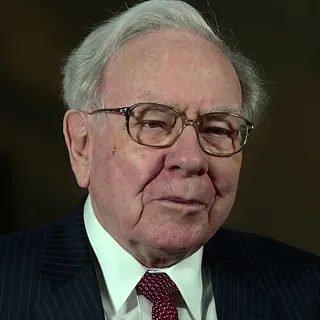
George Soros's investing advice
George Soros built the Quantum Fund into one of the most successful hedge funds in history and became famous for the 1992 bet against the British pound. He retired from managing outside money in 2011 and is alive; we show him as a legend because he no longer runs public money. His central idea is reflexivity: market participants' biased perceptions change the fundamentals they are trying to price, which creates booms and busts.
1. Look for the feedback loop
Ask how today's price and narrative are changing the underlying reality: cheap credit lifting collateral values, rising shares letting a company raise capital or buy rivals. Where perception feeds fundamentals, trends can run much further than value analysis suggests, and then reverse violently.
“The prevailing perception of the market actually affects the so-called fundamentals that market prices are supposed to impact”
2. Map the boom-bust sequence
Reflexive trends are self-reinforcing at first and self-defeating later. The opportunity is to recognize the early stage, ride it while it strengthens and watch for the moment when the gap between perception and reality becomes unsustainable.
“It can be initially self-reinforcing but eventually self-defeating, in which case you have a boom and a bust.”
3. Assume you are partly wrong
Soros's philosophy starts from fallibility. The practical habit is to search for the flaw in your own thesis and to know in advance what would prove it wrong.
“Reflexive processes are not just unpredictable, they are genuinely indeterminate because the outcomes depend on the predictions that investors have made.”
4. Don't rely on forecasts
Because outcomes depend on what participants expect, the future is genuinely indeterminate. Build positions and portfolios that can survive many outcomes instead of betting on a single prediction.
“The idea that you should be able to predict the future is nonsense”
5. Size by conviction, cut fast when wrong
His best-known trades combined a clear asymmetry with large size, and his reputation was built as much on exiting quickly when a thesis failed as on being right.
6. Distrust both market and regulatory dogma
Soros rejected the idea that markets are perfect, and also warned that regulators are even more fallible. Markets need rules, but no ideology deserves blind faith.
“I argue that the ideology that markets are perfect is wrong, regulations are also imperfect, in fact they are more imperfect than the market”
FAQ
Is George Soros still alive?
Yes. Soros was born in 1930 and is alive. He retired from managing outside money in 2011, when his firm became a family office, so we show him as a legend and exclude him from our current stance tracker and consensus.
What is reflexivity?
Soros's theory that market participants' perceptions are always partly wrong, and that acting on those perceptions changes the fundamentals themselves. The feedback can create self-reinforcing booms that eventually reverse into busts.
How did Soros break the Bank of England?
On September 16, 1992, his fund held a very large position betting that the pound would be devalued. Britain left the European Exchange Rate Mechanism that day, and the fund reportedly made more than $1 billion.
Did Soros say 'It's not whether you're right or wrong'?
The line is widely attributed to him, but we could not find a primary source, so we list it as unverified.
Educational content summarizing Soros's published views. Not personal investment advice.