In short
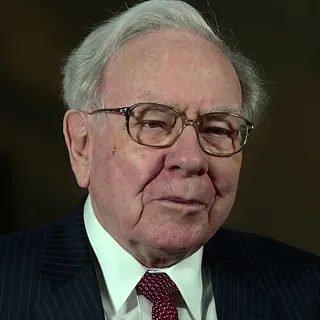
George Soros built the Quantum Fund into one of the most successful hedge funds in history and became famous for the 1992 bet against the British pound. He retired from managing outside money in 2011 and is alive; we show him as a legend because he no longer runs public money. His central idea is reflexivity: market participants' biased perceptions change the fundamentals they are trying to price, which creates booms and busts.
Key takeaways
- Markets do not just reflect reality; perceptions feed back into it (reflexivity).
- Booms and busts follow a self-reinforcing then self-defeating pattern.
- Expect your own view to be partly wrong and look for the flaw.
- When a thesis is working and the odds are high, size it boldly; when it breaks, exit fast.
- Prediction is impossible in a human system, so prepare for many outcomes.
From Budapest to the Quantum Fund
George Soros was born in Budapest on August 12, 1930. As a teenager he survived the Nazi occupation of Hungary under a false identity, then emigrated to England in 1947, where he studied at the London School of Economics and came under the influence of the philosopher Karl Popper. Popper's idea that all human knowledge is fallible, and that open societies are those which accept this, became the foundation of Soros's thinking about both markets and politics.
Soros moved to New York in 1956 and worked as an arbitrage trader and analyst. In 1973 he and Jim Rogers founded the fund that became the Quantum Fund, which compounded at extraordinary rates for decades. Its most famous moment came on September 16, 1992, Black Wednesday, when Soros Fund Management bet heavily that Britain would be forced to devalue the pound and leave the European Exchange Rate Mechanism. Britain did, and the fund reportedly made more than $1 billion.
In 2011 Soros returned outside investors' money and converted his firm into a family office managing his own and his foundations' assets. He is alive, but he no longer manages money for the public, which is why we show him as a legend rather than as a current voice. His political philanthropy through the Open Society Foundations is beyond the scope of this site; this page covers his investment ideas only.
Reflexivity instead of equilibrium
Mainstream economics treats markets as tending toward equilibrium: prices fluctuate, but they gravitate to values set by fundamentals. Soros argued that this picture is wrong for financial markets. In a 1999 interview with The New York Review of Books, he said equilibrium applies best to markets that deal with known quantities, but financial markets deal with quantities that are not only largely unknown but unknowable, because they discount a future that depends on how markets assess it in the present. The appropriate concept, he said, is reflexivity, not equilibrium.
“The appropriate concept, in my view, is reflexivity, not equilibrium.”
Reflexivity has two halves. The cognitive function: participants try to understand reality, but their understanding is always partial and biased. The participating function: participants act on their views, and those actions change reality. When the two interact, there is no independent fundamental value for prices to converge on. Speaking at MIT in 2008, Soros put it this way: the prevailing perception of the market actually affects the so-called fundamentals that market prices are supposed to impact.
Examples are everywhere. A rising share price lets a company issue stock or make acquisitions on favorable terms, which raises its earnings and justifies a higher price. Easy lending raises house prices, which raises the value of collateral, which encourages more lending. A currency under attack forces higher interest rates, which damages the economy and makes the attack more likely to succeed. In each case belief and reality feed each other.
The anatomy of boom and bust
Reflexive processes, Soros said in 1999, are not just unpredictable; they are genuinely indeterminate, because outcomes depend on the predictions investors have made. Sometimes the feedback is self-correcting and markets settle toward something like equilibrium. Sometimes it is initially self-reinforcing but eventually self-defeating, and then you get a boom and a bust.
“It can be initially self-reinforcing but eventually self-defeating, in which case you have a boom and a bust.”
In his writing he sketched a typical sequence. A trend begins, often with a real basis, and a bias develops around it. Early success reinforces the bias, which strengthens the trend. A period of testing follows; if the trend survives, conviction grows and the gap between perception and reality widens. Eventually the expectations become so extreme that reality cannot keep up, a moment of truth arrives, and the process reverses, often faster and harder than it rose.
The 2008 MIT talk applied the framework to the financial crisis then unfolding. That is the nature of financial systems, he said, and bubbles are a particular manifestation of it. In his 2008 book The New Paradigm for Financial Markets he described a 'super-bubble' built over decades on ever-easier credit and faith in self-correcting markets.
Fallibility as an investment edge
Soros's investing method begins with the assumption that his own views are probably flawed. Rather than seeking certainty, he formed a hypothesis about how a reflexive process would unfold, tested it with a position, and watched closely for evidence that he was wrong. People who worked with him have described him as unusually willing to change his mind, and quick to do so.
“Reflexive processes are not just unpredictable, they are genuinely indeterminate because the outcomes depend on the predictions that investors have made.”
This is where the most quoted line attributed to him comes from: that what matters is not whether you are right or wrong, but how much you make when you are right and how much you lose when you are wrong. We could not verify the exact wording in a primary source, so we list it as unverified, but the idea is consistent with his documented approach: asymmetry, sizing and speed of correction matter more than a high hit rate.
For ordinary investors the lesson is humbling and useful. Know why you own something, know what would prove you wrong, and act on that evidence rather than defending the original view.
Why prediction fails
Because financial markets are a human rather than a natural phenomenon, Soros told the MIT audience, the idea that you should be able to predict the future is nonsense. This is not a counsel of despair. It means that models borrowed from physics, which assume stable laws and independent observers, will fail at exactly the moments they are most relied on, because the observers are part of the system.
“The idea that you should be able to predict the future is nonsense”
The practical implication is that investors should think in scenarios and feedback loops rather than single forecasts. Ask what the consensus believes, how that belief is shaping behavior and fundamentals, what could break the loop, and what happens to prices if it breaks. Positions should be sized so that being wrong is survivable.
Markets, morality and rules
Soros's view of markets is two-sided. In the 1999 interview he described markets as amoral: excellent at aggregating individual interests but unable to express collective ones, which therefore need political decisions and moral values to prevent excesses. He criticized what he called market fundamentalism, the belief that markets left alone always correct themselves.
“I argue that the ideology that markets are perfect is wrong, regulations are also imperfect, in fact they are more imperfect than the market”
But he was just as skeptical of regulators. At MIT he argued that the ideology that markets are perfect is wrong, but that regulations are also imperfect, in fact more imperfect than the market, so you should not regulate more than you have to. His prescription was targeted oversight of credit and leverage, the forces that turn reflexive booms into systemic busts.
What investors can take from Soros
Few investors can replicate Soros's macro trades, and nobody should try with borrowed money. But reflexivity is a powerful lens for anyone. It explains why bubbles last longer than value investors expect, why crashes are faster than rallies, why credit cycles matter so much, and why the stories markets tell themselves can become self-fulfilling for a while.
Combine that lens with the humility of fallibilism, a refusal to trust forecasts and careful attention to the downside, and you have the core of his contribution. His own books, especially The Alchemy of Finance, remain the best place to study it in his words.
The principles in practice
Ideas only matter if they change decisions. Here is how Soros's philosophy translates into habits an ordinary investor can use. The full version, with a supporting quote for each rule, is on the investing advice page.
- 1. Look for the feedback loop
Ask how today's price and narrative are changing the underlying reality: cheap credit lifting collateral values, rising shares letting a company raise capital or buy rivals. Where perception feeds fundamentals, trends can run much further than value analysis suggests, and then reverse violently.
- 2. Map the boom-bust sequence
Reflexive trends are self-reinforcing at first and self-defeating later. The opportunity is to recognize the early stage, ride it while it strengthens and watch for the moment when the gap between perception and reality becomes unsustainable.
- 3. Assume you are partly wrong
Soros's philosophy starts from fallibility. The practical habit is to search for the flaw in your own thesis and to know in advance what would prove it wrong.
- 4. Don't rely on forecasts
Because outcomes depend on what participants expect, the future is genuinely indeterminate. Build positions and portfolios that can survive many outcomes instead of betting on a single prediction.
- 5. Size by conviction, cut fast when wrong
His best-known trades combined a clear asymmetry with large size, and his reputation was built as much on exiting quickly when a thesis failed as on being right.
- 6. Distrust both market and regulatory dogma
Soros rejected the idea that markets are perfect, and also warned that regulators are even more fallible. Markets need rules, but no ideology deserves blind faith.
FAQ
Is George Soros still alive?
Yes. Soros was born in 1930 and is alive. He retired from managing outside money in 2011, when his firm became a family office, so we show him as a legend and exclude him from our current stance tracker and consensus.
What is reflexivity?
Soros's theory that market participants' perceptions are always partly wrong, and that acting on those perceptions changes the fundamentals themselves. The feedback can create self-reinforcing booms that eventually reverse into busts.
How did Soros break the Bank of England?
On September 16, 1992, his fund held a very large position betting that the pound would be devalued. Britain left the European Exchange Rate Mechanism that day, and the fund reportedly made more than $1 billion.
Did Soros say 'It's not whether you're right or wrong'?
The line is widely attributed to him, but we could not find a primary source, so we list it as unverified.
Books by and about Soros
The Alchemy of Finance
His theory of reflexivity plus a real-time diary of his trading in 1985–86.
The Crisis of Global Capitalism
Market fundamentalism and the 1997–98 crises; discussed in the 1999 NYRB interview quoted here.
The New Paradigm for Financial Markets
The 'super-bubble' thesis written as the 2008 crisis unfolded.
All books, including the ones Soros recommends →
As an Amazon Associate, GuruVoices earns from qualifying purchases. Book recommendations are chosen from what the investors themselves wrote or said, never from what pays.
Every quotation on this page was checked word for word against the linked source. Dates are when the words were published or spoken. Quotes that are popular but that we could not trace to a primary source are listed separately on the quotes page.